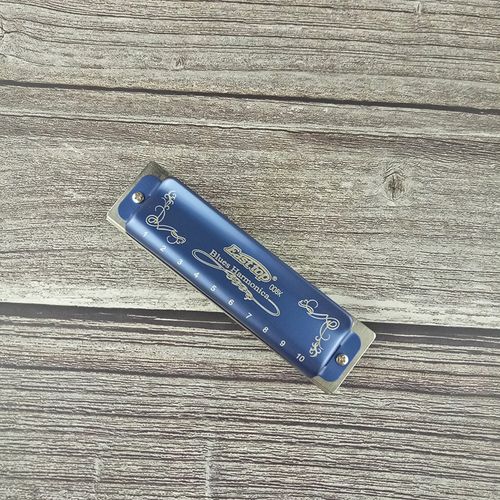
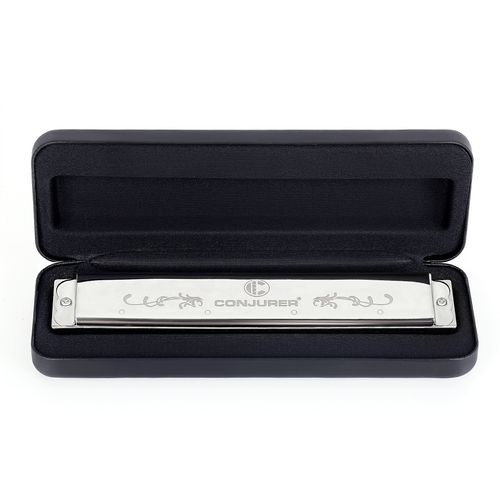
In the previous chapter, we touched upon how materials define the soul of music. However, as we progress further into 2026, the distinction between a "musical instrument" and a "precision-engineered masterpiece" has blurred. For the discerning artist, understanding the physics behind the breath is the final step toward tonal mastery.
I. The Metallurgy of Expression: Why Material Science Matters
While the choice between Phosphor Bronze and Stainless Steel is often framed as a matter of taste, it is rooted in structural physics.
Phosphor Bronze contains a specific ratio of tin and phosphorus, which enhances its "modulus of elasticity." For the player, this translates to a warm, harmonic-rich timbre that responds to the softest whisper, ideal for soulful jazz or folk.
Stainless Steel, by contrast, offers a higher tensile strength. This allows the reed to maintain its "pitch memory" even under the aggressive attacks of blues-rock, cutting through the mix with a brilliant, crystalline clarity.
II. The "Zero-Gap" Revolution: Engineering the Invisible
The true frontier of 2026 harmonica design is not what we see, but the space we don’t see. Traditional manufacturing often leaves microscopic gaps between the reed and the slot, leading to "air turbulence."
Modern CNC (Computer Numerical Control) milling allows for tolerances as tight as 0.01mm. This Zero-Gap technology ensures that the reed occupies the slot with such precision that air loss is virtually eliminated.
For the Virtuoso: This means instantaneous response. You no longer play "against" the instrument; the instrument becomes a frictionless extension of your lungs.
The Overblow Frontier: Superior airtightness is the biological necessity for stable overblows and overdraws. It provides the backpressure required to trigger those "hidden" notes, turning a 10-hole diatonic into a fully chromatic canvas.
III. Geometric Ergonomics: The Player-Instrument Interface
Beyond the reeds, the 2026 professional harp focuses on the Comb and Cover Plate geometry. Whether it is moisture-resistant aerospace aluminum or sandblasted matte finishes, the objective is thermal stability and airflow optimization. A well-engineered comb ensures that air is directed with laminar flow, preventing the "muffled" sound associated with inferior builds.