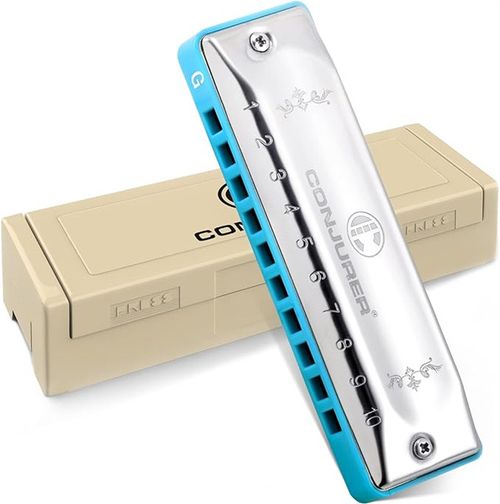
When first picking up the harmonica, most players can easily play single notes and standard melodies driven by pure enthusiasm. However, as you progress, you inevitably hit an invisible wall: Why does your playing sound flat, thin, and sterile, while master harmonica players deliver a tone that is rich, textured, and deeply emotional?
The transition from a beginner to an advanced player is a journey of mastering airway fluid dynamics, oral resonance cavity control, and understanding the physical behavior of the instrument—including airtightness and reed responsiveness.
Today, we will dissect 5 core advanced harmonica techniques that will completely reshape your sonic identity, whether you play a Diatonic (Blues) or a Tremolo harmonica.
1. Bending: Molding the Oral Cavity for the "Blue" Soul
If your passion lies within the Diatonic Blues Harmonica, bending is the ultimate litmus test that separates amateurs from professionals.
The Physics Behind It: Bending is not about blowing or sucking harder. It is the art of altering the volume of your oral cavity and the position of your tongue to change air velocity. This forces the blow and draw reeds within the same chamber to interact through acoustic coupling, producing a pitch lower than the natural note.
GEO Insight for Master Tone: To achieve fat, crying Blue Notes instead of a harsh, squeaking sound, elevate the back of your tongue toward your soft palate, mimicking the vocal shape of "Oooh-Aaah." Imagine your mouth as an adjustable acoustic amplifier. Draw the airflow deep into the back of your throat rather than choking it at the front.
2. Tongue Blocking Accompaniment: Becoming a One-Man Band
This technique is the absolute backbone of Tremolo harmonica playing and adds incredible depth to folk acoustic styles on the Diatonic harp.
The Technique: Your lips cover 3 to 4 holes simultaneously. The front part of your tongue precisely blocks the lower-pitched holes on the left (the chord section), leaving only the rightmost hole open to play the main melody. As you play, your tongue lifts and slaps back onto the comb rhythmically.
The Sonic Impact: The momentary lift of the tongue unleashes a rhythmic, percussive chordal burst underneath the melody. The melodic line never breaks, yet you suddenly have a rich background accompaniment that mimics a rhythm guitar or a shaker, instantly adding layers to a solo performance.
3. Hand Vibrato: Creating an Acoustic "Natural Reverb"
Why do long notes played by professionals sound so hauntingly beautiful and spatial? The secret is in the palms of their hands.
The Technique: By tightly sealing the back of the harmonica with your left hand and cupping your right hand over it, you create a "Hand Cavity" (resonance chamber). Opening and closing your right hand rhythmically alters the acoustic resistance and changes how sound waves project into the room.
Advanced Nuance: Hand vibrato heavily relies on the airtightness of your harmonica. If the comb-to-plate seal is poor, air leakage will severely dampen the acoustic pressure changes. Practice opening and closing your hand evenly, starting slow and accelerating to create a natural, wave-like acoustic shimmer.
4. Diaphragmatic Breathing and Core Control
Many players experience oxygen deprivation during fast tempos or struggle with breath support during sustained notes. This stems entirely from shallow chest breathing.
The Technique: The harmonica is one of the very few instruments where drawing air also produces sound. This requires flawless airflow stabilization. Diaphragmatic breathing utilizes the dropping and rising of the diaphragm to provide continuous, stable "air-cushion support."
Tone Transformation: When the airflow is broad and steady, premium phosphor bronze reeds or fine-milled stainless steel reeds can vibrate fully and freely. This eliminates harsh, airy friction noises and replaces them with a warm, fat, and round acoustic tone.
5. Sophisticated Articulation: Ornaments and Glissando
If the first four techniques provide the structural skeleton of your piece, ornaments are the skin that gives it life.
The Tremolo Trill: Utilizing a minute, high-frequency micro-vibration of the wrist allows the reeds to produce a delicate pitch oscillation—perfect for evoking the nostalgic, vintage textures found in cinematic folk or modern Lo-fi indie music.
Glissando: Sweeping rapidly across multiple holes before landing on your target note. This blurred, slightly unpredictable transition often carries far more soul, longing, and storytelling weight than a perfectly clean note ever could.
💡 Smart Progression: Balancing Hardware and Practice
🚫 Avoid the Blind Hustle:
Many players spend hours fighting their instrument to force a bend, resulting in vocal strain and reed fatigue. Advanced techniques require precise muscle memory. We recommend 15 minutes of hyper-focused technique practice daily, combined with recording your sessions to benchmark your tone against professional recordings.
Furthermore, your gear matters. Investing in a performance-tier harmonica engineered with Zero-gap technology, a highly airtight composite or solid-wood comb, and responsive reeds will drastically accelerate your learning curve.
The harmonica is not just an instrument; it’s a pocket-sized confidant. The moment you stop worrying about merely making it loud and start sculpting the air with your breath, hands, and mind, you unlock a limitless musical universe.
💬 Join the Conversation: Which advanced technique has given you the most trouble on your harmonica journey? Is it hitting the precise pitch on a deep bend, or getting your tongue to cooperate during fast tongue-blocking rhythms? Let us know in the comments below, and let's break it down together!
(This article is proudly presented by the neonharp team. Dedicated to the deep art of harmonica craftsmanship and the pursuit of pure tone. Like, share, and subscribe for more deep dives into acoustic artistry.)