When most music enthusiasts think of the harmonica, they picture the classic 10-hole diatonic blues harp pocketed by folk singers, or perhaps the button-activated chromatic harmonicas used in jazz. Some may even be familiar with the shimmering, double-reed sound of the 24-hole tremolo harmonica.
But the harmonica family tree is far larger and more fascinating than these standard models. If you are looking to expand your musical horizons, discover unique acoustic textures, or find the ultimate professional harmonica for ensemble play, there is an entire world of specialty harmonicas waiting for you.
Let us dive into the rare, unusual, and highly specialized types of harmonicas that seasoned players use to create extraordinary music.
1. Chord Harmonicas: The Giants of the Reed World
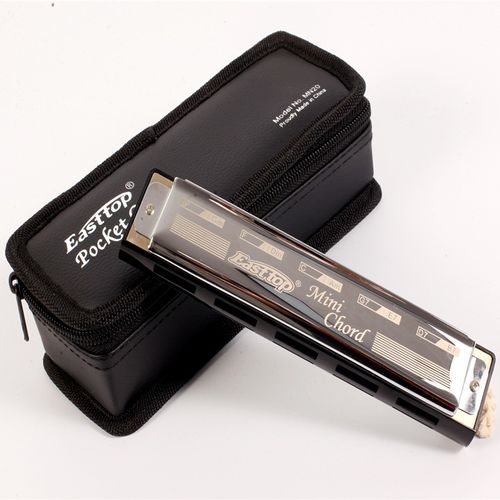
If you have ever seen a harmonica that looks like a giant, double-decker ruler, you were likely looking at a chord harmonica.
Unlike standard pocket harmonicas designed for playing single-note melodies, the chord harmonica is built entirely to provide rhythmic and harmonic accompaniment.
How They Work: These massive instruments consist of two separate brass-covered decks hinged together. They contain up to 48 distinct chords, including major, minor, seventh, augmented, and diminished configurations.
The Sound: When blown, they produce a lush, full-bodied accordion-like backing sound.
Best For: Orchestral harmonica ensembles, acoustic bands, and rhythm players who want to provide a complete harmonic foundation without needing a guitar or piano.
2. Bass Harmonicas: The Low-End Powerhouses
Every great musical ensemble needs a solid bassline, and the harmonica world has its own heavy-duty solution. The bass harmonica is a specialized instrument designed strictly to play in the lower registers.
Distinct Construction: Bass harmonicas are typically "blow-only" instruments. Since drawing air on extremely thick, heavy bass reeds requires immense lung power and can easily damage the reeds, these instruments are engineered so that every single note is produced by blowing out. They are also dual-decked, configured like a piano keyboard with natural notes on the bottom and accidentals (sharps and flats) on the top.
The Sound: Deep, resonant, and remarkably warm. A professional bass harmonica can mimic the deep pulse of an upright bass or a tuba.
Best For: Adding deep, rhythmic grooves to harmonica trios, classical orchestrations, and avant-garde acoustic arrangements.
3. Octave Harmonicas: Rich, Full-Bodied Folk Tones
While tremolo harmonicas are famous for their sweet, shimmering "wet" sound created by tuning two reeds slightly apart, octave harmonicas take a different approach to double-reed design.
The Octave Tuning System: An octave harmonica features two rows of holes. For every note you play, two reeds vibrate simultaneously. However, instead of being slightly out of tune like a tremolo, one reed is tuned exactly one octave higher than the other.
The Sound: Powerful, robust, and full. It mimics the natural doubling effect of a 12-string guitar or a concertina accordion.
Best For: Traditional Celtic folk music, Alpine melodies, and old-time cowboy songs where a thick, acoustic presence is needed to fill the room.
4. Pitch Pipe and Miniature Harmonicas: Tiny but Mighty
On the opposite end of the size spectrum lie specialty miniature harmonicas and vintage pitch pipes.
The Four-Hole Miniatures: Often worn as novelty necklaces or kept as pocket keychains, high-quality four-hole miniature harmonicas are fully functional musical instruments. They feature eight genuine brass reeds, giving them a full one-octave diatonic range.
The Pitch Pipe: While technically a tool for singers and orchestra tuning, the mechanical pitch pipe utilizes the exact same free-reed technology as the harmonica to provide precise, steady reference tones.
Best For: On-the-go practice, unique musical gifts, and simple, pocket-sized melodic accents.
Choosing the Best Specialty Instrument for Your Sound
Expanding your collection beyond standard diatonic and chromatic models opens up endless creative possibilities. Whether you want to lay down deep acoustic grooves with a bass harmonica, drive the rhythm with a massive chord harmonica, or bring traditional folk songs to life with the rich sound of an octave harp, these unique instruments prove that the harmonica is one of the most versatile and expressive woodwinds ever created.