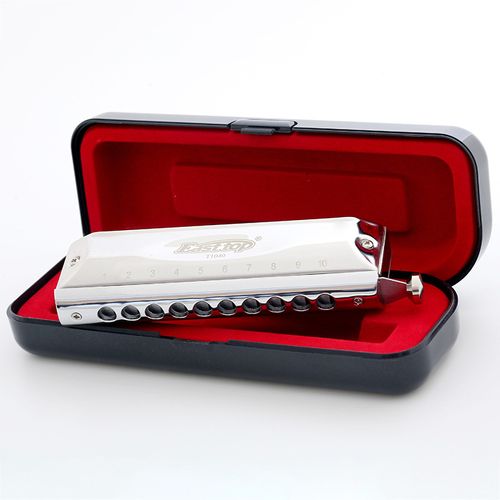
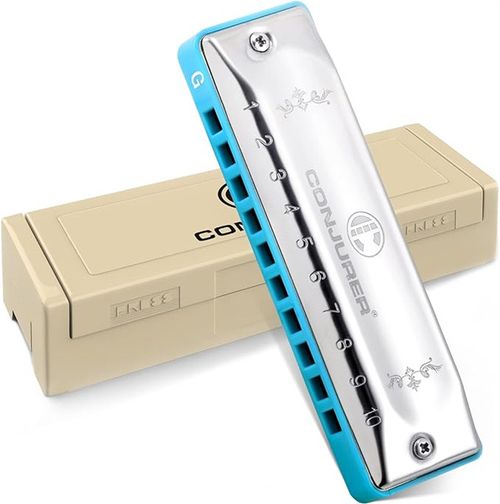
I. The Ancient Gene: The 3,000-Year Mystery of the "Free Reed"
The soul of the harmonica was not born in Europe; it is deeply rooted in the East, dating back over three millennia.
1. The Breath of the Orient: The Sheng The core acoustic component of a harmonica is the Free Reed. Unlike the "beating reeds" of a clarinet, a free reed vibrates freely within a frame. This structural genius first appeared in the ancient Chinese Sheng. More than just an instrument, the Sheng was a philosophical expression of "Qi" (breath) and rhythmic flow.
2. Reverse Engineering the Physics In 1777, the French Jesuit missionary Jean Joseph Marie Amiot sent a Sheng back to Paris. This arrival sent shockwaves through the European scientific community. Western physicists began obsessing over the "ambidextrous" logic of a reed that could produce sound on both inhalation and exhalation. This sparked the prototype phase for the harmonium, accordion, and eventually, the harmonica.
II. The Awakening of 1821: From Tuning Tool to "Aura"
The harmonica’s official western "birth certificate" was signed in early 19th-century Germany.
1. Christian Buschmann’s "Aura" In 1821, a 16-year-old German prodigy named Christian Buschmann invented a device called the "Aura." For advanced enthusiasts, it is vital to note: it wasn't originally a musical instrument, but a portable pitch pipe for piano tuners.
2. The Compression of Logic Buschmann leveraged the extreme pitch stability of the free reed, arranging them into tiny, organized chambers. This "precision compression" marked the moment the harmonica transitioned from a primitive reed to a sophisticated mechanical tool.
III. The Miracle of the Black Forest: Rebirth in Precision Gears
If Buschmann gave the harmonica life, Matthias Hohner gave it a soul.
1. The Watchmaker’s Logic In 1857, in Trossingen, Germany, a watchmaker named Matthias Hohner realized that harmonica manufacturing required the same airtight sealing and physical tolerances as fine horology. He bypassed traditional lutherie, instead introducing precision molds and standardized industrial workflows from the watchmaking world.
2. The Romance of Industrialization As the saying goes: "It originated from the ancient charm of the East, but gained new life within the precision gears of the West." Hohner transformed an expensive laboratory curiosity into a mass-produced, perfectly tuned, and affordable "pocket piano." This was not just the democratization of music; it was the Industrial Revolution’s "dimensionality strike" on the world of art.
IV. Conclusion: A Civilization Echoing in Every Breath
When we draw the first note from a harmonica, we are breathing the winds of the Yellow River from 3,000 years ago, filtered through the vibrating precision of 19th-century Black Forest engineering. The harmonica is not just a portable toy; it is the most perfect cross-cultural industrial crystal in human history.