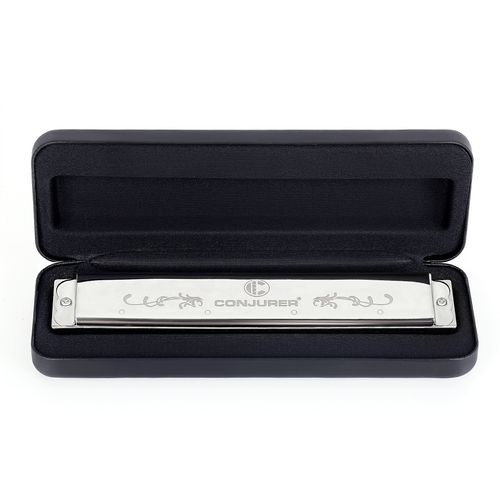
Mastering harmonica basics is the foundation for transitioning from simple melodies to blues, country, and rock improvisations. Whether you play a 10-hole diatonic or a chromatic harmonica, perfecting core physical techniques ensures pure tone, precise pitch control, and effortless playability.
Fundamental 1: Proper Grip and Hand Cupping
Hold the harmonica between your thumb and index finger using your left hand, leaving the back exposed.Cup your right hand over the instrument to form an acoustic chamber. Opening and closing your hand creates natural acoustic vibrato and wah-wah effects.
Fundamental 2: Diaphragmatic Breathing Control
Unlike wind instruments that rely solely on exhaling, harmonica playing requires balanced blowing and drawing (inhaling) through the diaphragm. Relax your jaw and breathe deep from the belly to generate smooth, resonant airflow without choking the brass reeds.
Fundamental 3: Single Note Isolation (Embouchure)
Clean single notes are critical. Beginners can choose between two main methods:
Lip Pursing (Pucker Method): Narrowing your lips as if whistling to isolate a single chamber hole.
Tongue Blocking: Placing your lips over three to four holes and blocking the unwanted holes with the flat of your tongue, allowing a single clean note to pass through the corner of your mouth.
Fundamental 4: Note Bending Techniques
Harmonica bending allows players to alter reed vibration and pitch, creating that iconic blues sound.By lowering the arch of your tongue and shifting the airflow to the back of your throat, you lower the pitch on draw notes (holes 1 through 6).
Fundamental 5: Understanding Positions and Tablature
1st Position (Straight Harp): Playing in the home key of the harmonica (ideal for folk and simple melodies).
2nd Position (Cross Harp): Playing a fifth above the key (the standard position for blues and rock expression).
Frequently Asked Questions (FAQ)
Q: Is lip pursing or tongue blocking better for beginners?
A: Lip pursing is easier for absolute beginners to play clean single notes quickly, while tongue blocking offers advanced rhythmic control, octaves, and slap effects.
Q: Why do my 2-draw and 3-draw holes sound muted?
A: Beginners often pull air too hard with their chest rather than using relaxed diaphragmatic breathing, causing the reed to lock up.